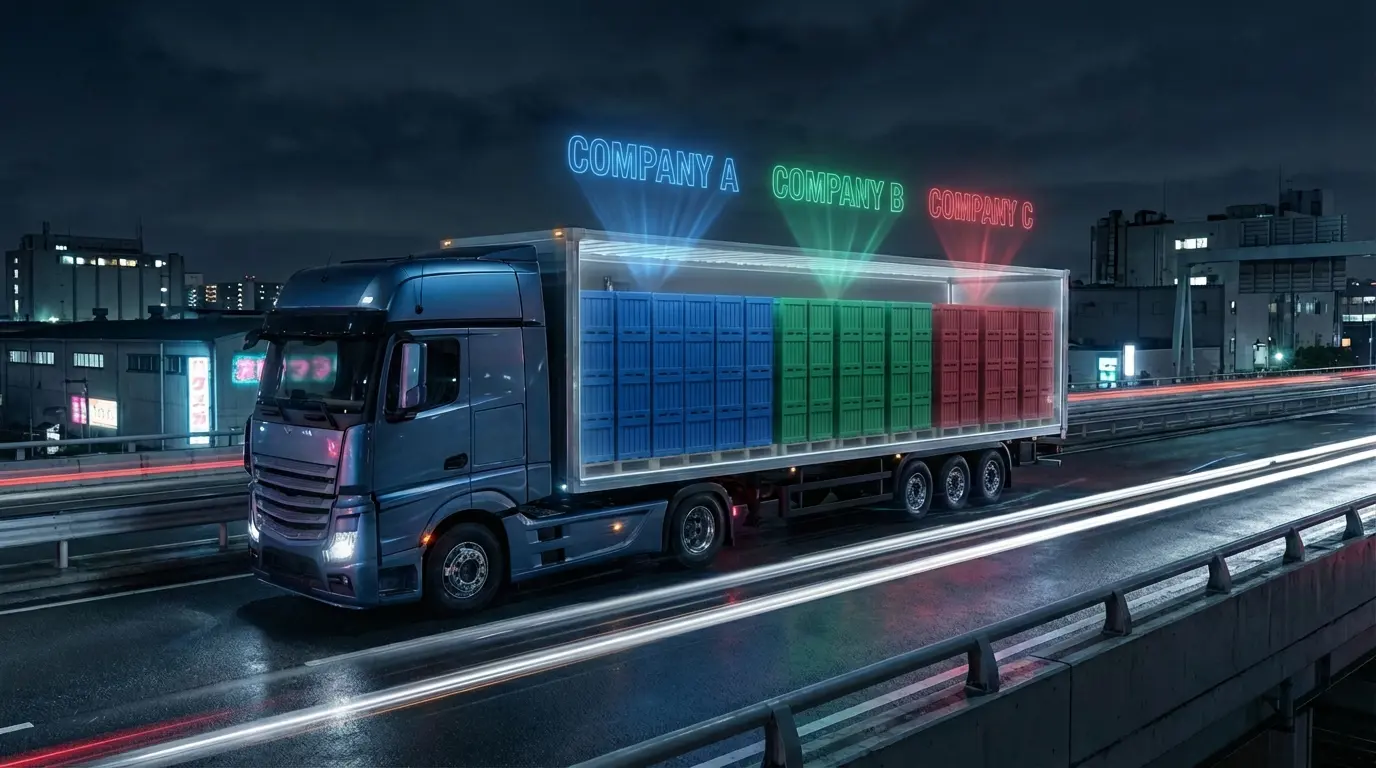
Joint Delivery
Making Shared Transport Operational in Japan
Why improving load factor is a structural priority—and how LOGISTICAL enables reliable multi-company coordination.
Book DemoThe Context
Japan's logistics sector faces a structural mismatch: demand is fragmented, trucks run underloaded, and capacity is limited by labor regulations and driver shortages. Without intervention, MLIT projects a 34% transport capacity shortfall by 2030.
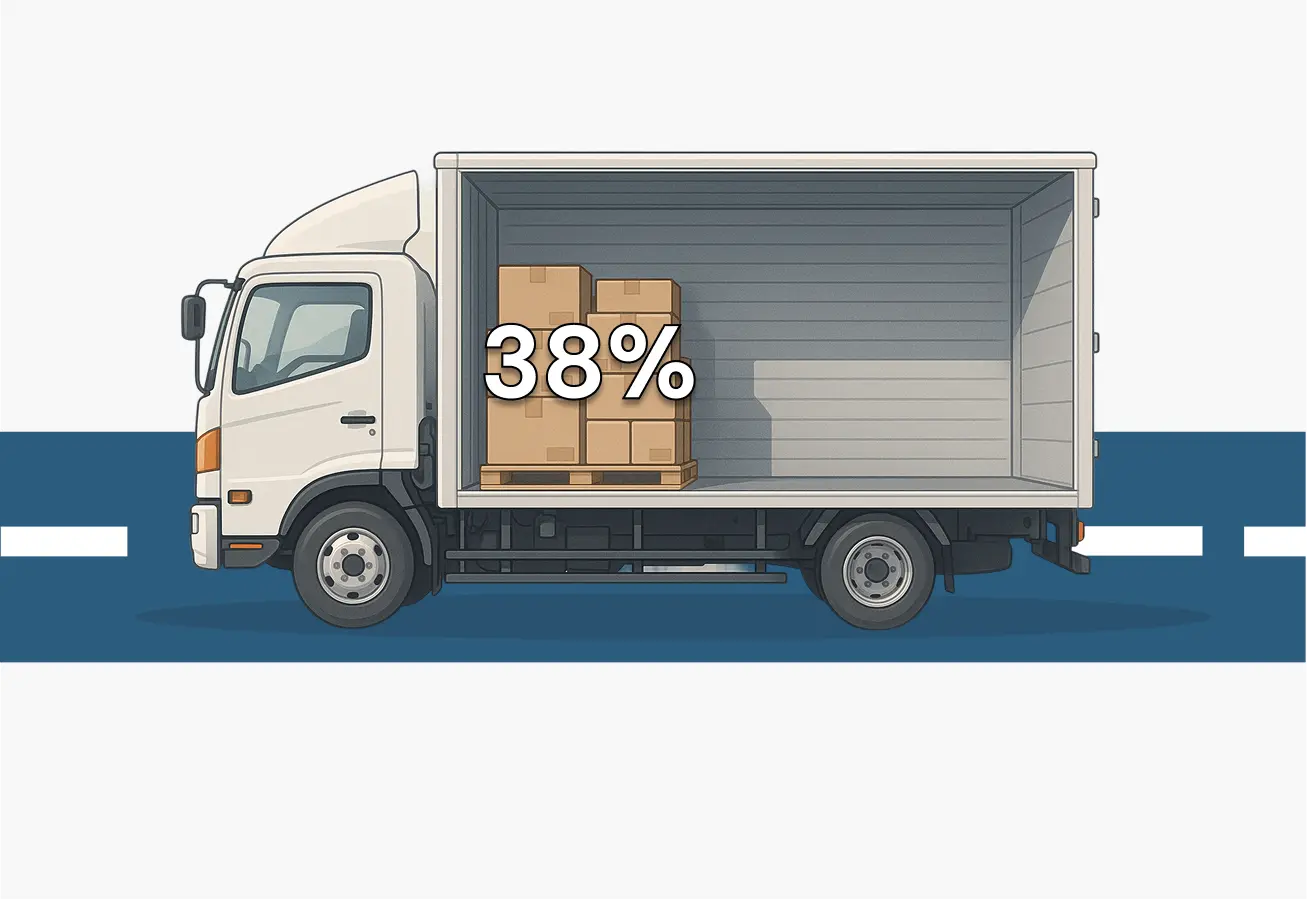
Average Load Factor
Japan's truck capacity is significantly underutilized (FY2020). Policy materials explicitly call for improving it toward 50%.
Source: MLIT JapanWaiting/Handling Time
Per trip spent on 荷待ち・荷役等. A major share of driver's working time consumed by operational friction.
Source: MLIT JapanCapacity Shortfall Risk
Without sufficient measures, Japan's transport capacity is estimated to be short by ~34% by 2030 (~9億トン相当).
Source: MLITThe Problem
Underloaded Trucks Are the Norm
With an average load factor around 38%, many routes carry far below available capacity. This increases cost per delivery and forces the system to depend on more trucks and driver-hours than necessary.
Regulatory Constraints Create Hard Capacity Ceiling
Regulatory and labor constraints reduce available driver-hours. MLIT estimates that without effective measures, transport capacity could be short by 34% in 2030. Joint delivery is one of the few levers that improves "throughput per driver-hour."
Collaboration Desired but Not Systemized
Companies want to collaborate (share lanes, fill unused space, reduce empty return trips), but in practice it fails because capacity is estimated not measured, volume data is inconsistent, and coordination adds manual work.
- Capacity is estimated, not measured
- Volume data is inconsistent across partners
- "Who has space right now" is not visible
- Rules for collaboration are not standardized
- Coordination adds manual work (calls, emails, spreadsheets)
Workflows Too Manual to Scale
Dispatch and operations already carry heavy overhead. Waiting/handling time is ~3 hours per trip. Adding more coordination work makes joint delivery unattractive—automation is essential.
Our Solution
How Logistical Realizes Joint Delivery
Joint delivery requires more than goodwill—it requires operational infrastructure. Logistical provides a system that addresses the core blockers to collaboration:
3D In-Truck Volume Detection
Measure actual remaining capacity
AI-Driven Matching
Allocate shipments to available space based on exact volume
Workflow Automation
AI assistants reduce human coordination time
How It Works
Measure Real Capacity (Not Estimated)
Logistical's 3D in-truck volume detection captures loaded volume, remaining available space, and utilization rate over time. This addresses the fundamental issue behind low load factor: if capacity is not measurable, it cannot be managed.
- Loaded volume measurement
- Remaining available space
- Utilization rate tracking
Match Orders by Exact Volume (Real Time)
Measured capacity is sent to the cloud, where Logistical identifies trucks with verified available space, matches partner orders based on precise volume and constraints, and supports consolidation on overlapping corridors.
- Verified space identification
- Precise volume matching
- Corridor consolidation
Automate Coordination (Workload Goes Down)
Logistical automates the operational steps that usually block joint delivery: order registration and validation, partner confirmations, status updates, and exception handling.
- Order registration & validation
- Partner confirmations
- Status updates & exception handling
Execute With Governance (Safe Collaboration)
Joint delivery requires trust. Logistical supports role-based visibility, standardized rules for sharing capacity, and traceable status history with time-stamped updates.
- Role-based visibility
- Standardized sharing rules
- Traceable status history
What This Enables
Higher Utilization Under Driver Constraints
By consolidating freight into fewer, fuller trucks, joint delivery increases productivity per driver-hour. This is directly aligned with the need to avoid the projected 34% capacity shortfall risk by 2030.
Lower Cost and Less Waste
Improved load factor reduces redundant routes, unnecessary truck-kilometers, and operational waste that come from running underloaded vehicles (the structural issue reflected in the ~38% load factor).
Collaboration That Can Scale
Joint delivery becomes repeatable across routes, partners, and regions—because capacity is measured, matching is systemized, and coordination is automated.
Joint delivery isn't just a policy goal. It's an operational challenge that requires measurable capacity, automated coordination, and governance infrastructure. Logistical builds that layer so collaboration becomes practical.
Book DemoExplore Other Solutions
Frequently Asked Questions
What is joint delivery?+
Joint delivery consolidates freight from multiple shippers or carriers onto one truck, raising load rates and cutting the number of trucks, transport costs, and CO2 emissions.
Can it match backhauls and available loads?+
Yes. It matches loads to empty and return trips, cutting empty running and making better use of each vehicle.
What are the benefits of joint delivery?+
Higher load efficiency, lower transport costs, relief from driver shortages, and reduced CO2 emissions.
Do you support mixed-load (consolidated) shipments?+
Yes. Small lots from multiple shippers can be consolidated to raise per-truck efficiency.
Contact Us Today
Have questions about our Logistical solutions? Reach out to our team and let's discuss how we can optimize your logistics cost.
